Tundra Mine Remediation Project
Learn about the Tundra Mine Remediation Project, the work that's been done and what's ahead.
On this page
Overview
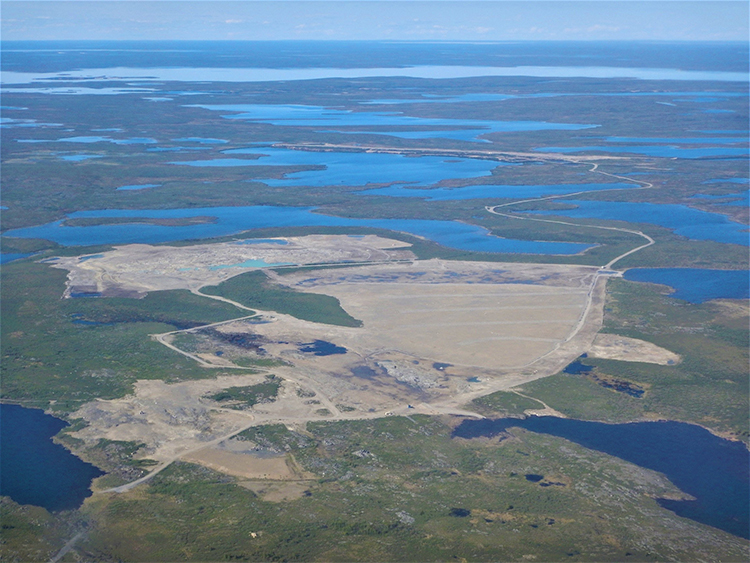
Tundra Mine is a former gold mine located 240 km northeast of Yellowknife in the Northwest Territories. Mine operations began in 1964 and ceased in the mid-1980s. Tundra is 1 of 3 mines that reverted to the Government of Canada in 1999 when the owner, Royal Oak Mines Inc., went into receivership.
This occurred before Canada implemented the Mine Site Reclamation Policy for the Northwest Territories. Implemented in 2002, this policy states that adequate security be provided by the operator of the mine to ensure the cost of reclamation in case of abandonment. The Government of Canada has therefore funded and completed remediation of this site, and continues to conduct ongoing care and maintenance activities, from 1999 to the present day.
As of 2023, the Tundra Mine site is currently being managed under its Long-Term Monitoring Plan. Remediation of the Tundra Mine site was completed in 2018, followed by 5 years of adaptive management from 2018 to 2022. Site inspections and environmental monitoring continue at Tundra Mine to ensure the remediation is performing as intended.
Project goals
The Tundra Mine Remediation Project goals include:
- using approaches that are cost-effective and risk-based
- restoring the land using industry best practices of:
- Traditional Knowledge
- science
- engineering
- working with Indigenous rights holders in all project stages to:
- build positive relationships and trust
- protect traditional lands and water
- planning for effective closure and monitoring, including community involvement in monitoring where warranted
Issues at the site
The issues facing the Tundra Mine Remediation Project team included:
- physical hazards
- tailings and waste rock
- contaminated water
Physical hazards at Tundra Mine included dilapidated mining facilities and infrastructure, as well as mine openings. The mining facilities were dismantled in 2007 and the materials were consolidated and placed in an engineered non-hazardous waste landfill on site.
The landfill, constructed in 2007, is covered (capped) by a geomembrane liner and gravel. This landfill cap prevents contact with the underlying mine waste; fresh rainwater will flow over the gravel cap, separated from contaminants by the geomembrane liner.
All mine openings were covered in 2007 by caps constructed of concrete and steel.
Tailings is the material left over from the process of extracting mineral from ore. The tailings at Tundra Mine contain high levels of arsenic and other metals. Waste rock is rock that must be removed during the mining process in order to access the ore material. It often contains high levels of metals and poses a risk to water quality.
All tailings and waste rock at Tundra Mine were consolidated in an onsite containment facility covered by a geomembrane liner and gravel. Like the landfill cap, the cap at this containment facility prevents contact with the underlying mine waste. Fresh rainwater will flow over the gravel cap, separated from contaminants by the geomembrane liner.
Pre-remediation, contaminated water at the Tundra Mine site was contained within 2 tailings ponds. Tailings ponds were used as tailings disposal areas during the mining process. Water in these tailings ponds contained high levels of arsenic and other metals.
The tailings ponds were contained by dams, which diverted the area's natural water flow through the area. During remediation, all contaminated water was removed from the ponds and treated in an onsite water treatment facility. All dams were removed, allowing water flow to return to its natural pre-mining flow path. There are no tailings ponds remaining at Tundra Mine. Once drained, approximately half of where the tailings ponds once were became the location of the Tailings Containment Area.
Engagement approach
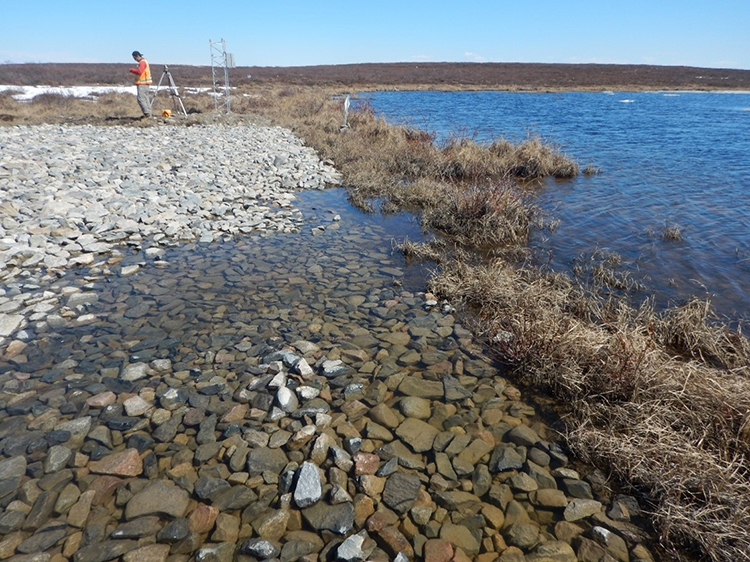
The Tundra Mine Remediation Project actively engages Indigenous communities. This is done by providing regular project updates and bringing Elders and community representatives from the Yellowknives Dene First Nation and the North Slave Métis Alliance to the site to see the remediation activities in person. The insight they provided was invaluable to Canada when making decisions about how to clean up the mine site area for the safety of Northerners and the environment.
Work done to date
2020 to 2022
As part of the adaptive management phase of the remediation, annual water quality monitoring and geotechnical inspections were conducted during the summer field seasons.
2022 was a milestone year for the Tundra Mine Remediation Project, marking its fifth year post-remediation. A Performance Assessment Report was completed and confirmed that the site is performing as designed. Long-term monitoring at the site will begin in the spring of 2023.
2019
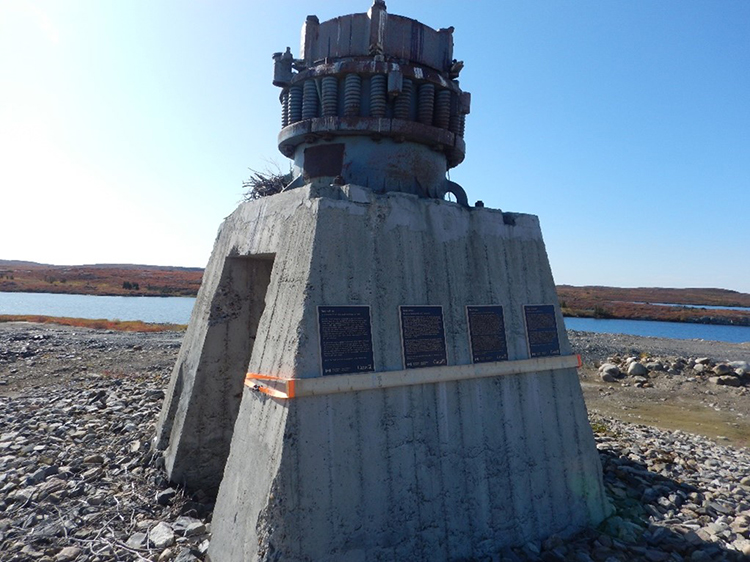
The remediation contractor dismantled their camp and removed all equipment and supplies from the site in February/March 2019. Environmental monitoring of the site continued monthly during the open water season.
Commemorative plaques in the Tłı̨chǫ (Dogrib), Wıı̀lıı̀deh Yatı, English, and French languages were installed in 2019 on the foundation of the former rock crusher, to acknowledge the site history, the completed work, and the remediation partners involved.
2018
Remediation work was finalized during the Summer 2018 field season and the remote monitoring network was installed in preparation for the site's Adaptive Management Phase. An adaptive management phase, the initial period of long-term monitoring, prepares a project site for eventual long-term monitoring.
The remote monitoring network consists of monitoring instruments installed directly in the Tailings Containment Area (TCA), as well as remotely operated cameras. The TCA instruments measure the temperature of the contained mining waste to evaluate how waste is naturally/passively freezing and stabilizing in the cold northern climate.
The remotely operated cameras are located at critical drainage points on site and were operated throughout the adaptive management phase. The remediation project team received daily photos from these cameras to verify the site remained stable.
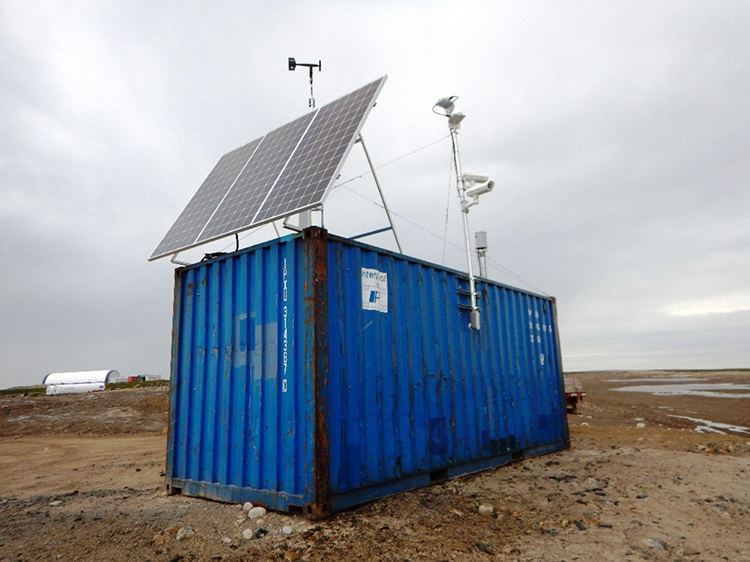
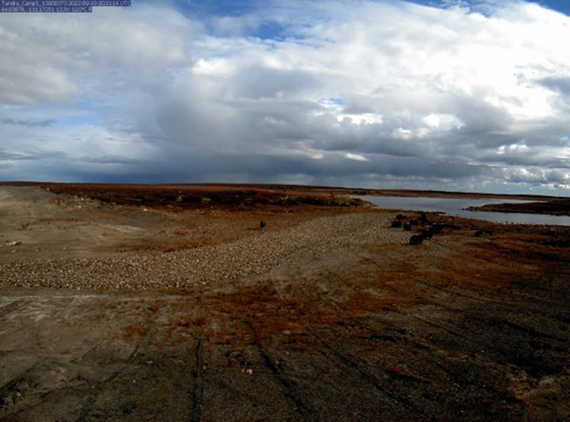
Stitching these daily photos together created timelapse videos such as that below, from cameras at Hambone Lake, allowing the project team to see at a glance how the site changes during the freshet (snowmelt) season:
Transcript for video: Tundra Mine Remediation Project: Freshet Season Timelapse at Hambone Lake, NWT
A 3-minute video of daily photos taken at Hambone Lake, showing one photo per second from April to November. The date of the daily photo is in the upper left corner of the screen, along with text that says 'TCA Outflow: Tundra Mine'. The video itself is of a flat, snow-covered terrain, with cloud-filled and cloud-covered skies in the background. As the video progresses through the months, the snow is seen melting, exposing muddy grounds covered with puddles of water, and a body of water on the left. By the time the photos reach mid-October, snow is once again seen on the ground. The video ends with the site covered in snow once again.
2017

Remediation work resumed in spring of 2017 per the Remedial Action Plan submitted to the Mackenzie Valley Land and Water Board. This included:
- treating tailings-impacted water
- consolidating and installing a liner over the Tailings Containment Area (TCA), also known as an engineered cap construction
- excavating and treating hydrocarbon-impacted soils
- regrading the West Lower Pond Borrow Area covered
2016
Care and maintenance activities at the site were completed and a Phase IIB remediation contract was awarded.
2014 to 2015
In August 2014, the contractor informed the Government of Canada that it would be unable to complete the remediation contract. The contract was terminated by mutual consent in April 2015. The site began to be managed through a care and maintenance contract in April 2015.
2012 to 2014
Further remediation work occurred, including:
- additional water treatment in the tailings ponds
- treating hydrocarbon-contaminated soils covering tailings and waste rock
- decommissioning dams
2011
Full remediation of the site began in June 2011. This work included continued water treatment, excavation of hydrocarbon-contaminated soils and the consolidation of tailings solids and buried debris.
2010
The contract for further remediation was awarded and water treatment of the tailings ponds continued. Water treatment involves draining the existing tailings ponds, treating the water, and containing the remaining tailings solids in a Tailings Containment Area, which will be covered.
2009
Water treatment was carried out onsite to treat the water in the tailings ponds. When CIRNAC assumed responsibility of the site, there were 2 tailings ponds at the Tundra Mine site containing the produced tailings, a by-product of the historical mining operations.
2007
Initial remediation was completed, including:
- removal of buildings and hazardous waste
- construction of a non-hazardous landfill
- capping of mine openings
What's next
Crown-Indigenous Relations and Northern Affairs Canada (CIRNAC) will continue to actively monitor the remediated site through the Long-Term Monitoring Phase. This includes remote monitoring assisted by automatic logging sensors, as well as regular visits to site to take samples and measurements. The project team will continue to monitor the water quality in and around the site, as well as the geotechnical stability of the site. This will occur annually during the summer field season months.
CIRNAC is committed to ensuring that all clean-up activities work as planned to protect the health of Northerners and the environment.